Attic Cleanout in Florida Heat: Why You Shouldn't Do It Yourself
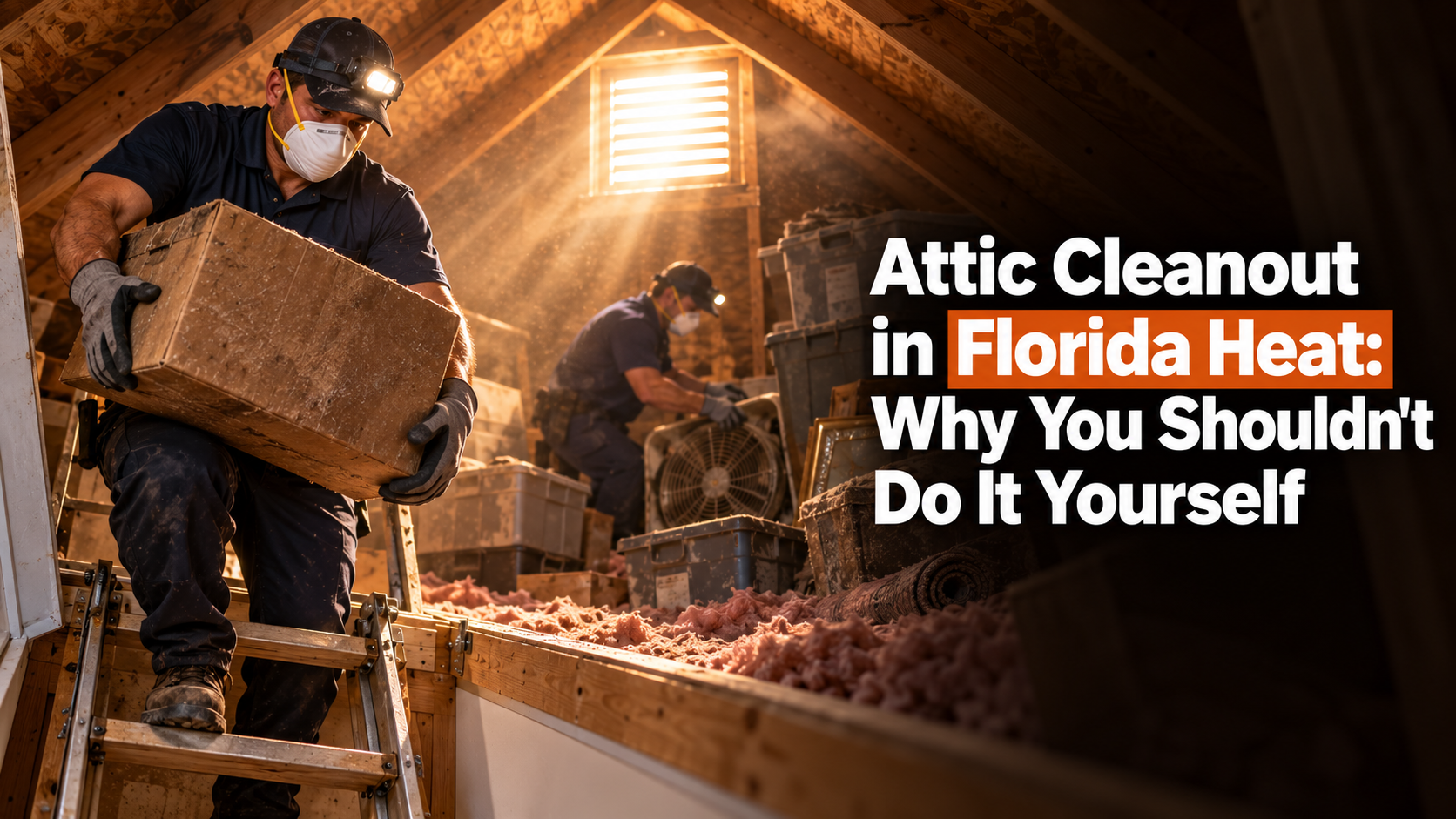
You know what's up there. Boxes you haven't opened since the Clinton administration. Holiday decorations you stopped using. Luggage from trips you no longer take. Maybe old insulation that's seen better decades.
You've been meaning to clean it out. Every year you say "this summer." And every summer, you open the attic hatch, feel that wall of heat hit your face, and close it right back up.
There's a reason for that. Florida attics are genuinely dangerous places to spend extended time. And cleaning one out isn't a quick job.
Let's talk about why attic cleanouts in South Florida are different — and why most people shouldn't attempt them alone.
The Florida Attic Heat Problem
This isn't exaggeration. This is physics.
Attic temperatures in South Florida:
Summer peak: 140-160°F (60-70°C)
Even in "mild" months: 100-120°F
After sunset: Still dangerously hot for hours
Your attic is essentially a solar oven. Dark roofing materials absorb heat all day. Minimal ventilation traps it. The space between your ceiling and your roof becomes the hottest location on your property.
What happens to humans in 140°F:
Heat exhaustion begins within 15-20 minutes
Confusion and disorientation follow
Heat stroke is a genuine medical emergency
In confined spaces, people pass out
This isn't about being tough or drinking enough water. At those temperatures, your body simply cannot cool itself fast enough. Professional outdoor workers have strict protocols about heat exposure. Your attic doesn't have protocols — it just has heat.
The Other Attic Challenges
Heat isn't the only issue:
Limited access.
Most attics are accessed through a ceiling hatch or pull-down ladder. Every item you remove has to come down that ladder. Large items may not fit. Heavy items are dangerous on narrow attic ladders.
Confined space.
Low ceilings, exposed rafters, limited floor space (often just joists with insulation between them). One wrong step and you're through the ceiling into the room below.
Poor air quality.
Decades of dust. Fiberglass insulation particles. Possible mold in humid Florida conditions. Rodent droppings if you've ever had visitors. This is not air you want to breathe for hours.
Wildlife possibilities.
Squirrels, rats, bats, wasps, and various insects find attics appealing. Discovering them while you're up there, overheated, in a confined space — not ideal.
Electrical hazards.
Wiring runs through attics. In older homes, it may not be up to code. Disturbing stored items around old wiring in the dark while sweating profusely is a recipe for problems.
What's actually up there.
You probably don't fully know. Attics accumulate items over decades. Multiple generations of owners may have contributed. You might find anything from vintage collectibles to hazardous materials.
What People Store in Florida Attics
Despite the heat, people store things up there. Things that often don't survive well:
Holiday decorations.
The classics. Christmas trees, lights, ornaments. Often the only things people actually retrieve regularly.
Old luggage and bags.
From trips past. Usually empty. Taking up significant space.
Clothing and textiles.
Stored "just in case." Often damaged by heat, humidity, or pests after years in attic conditions.
Paper and documents.
Old files, records, magazines, books. Florida humidity plus attic heat equals deterioration.
Electronics.
Old computers, TVs, stereos. Heat has likely destroyed them even if they weren't already obsolete.
Baby items and kids' stuff.
Outgrown decades ago. Kept for grandchildren who may never want them.
Furniture pieces.
Items that didn't fit downstairs. Chairs, small tables, frames.
The mystery boxes.
Sealed, unlabeled, contents unknown. Could be anything.
Old insulation.
If your home is older, the existing insulation may be degraded, contaminated, or insufficient. Some older homes have vermiculite insulation that may contain asbestos.
Why DIY Attic Cleanout Is a Bad Idea
Let's walk through what attempting this yourself actually looks like:
Hour 1:
You open the hatch. Heat hits you. You climb up, start sorting. Within 15 minutes, you're drenched in sweat. You come down for water.
Hour 2:
Back up. You've moved maybe 10 boxes to the hatch opening. You're breathing dust and insulation particles. You feel dizzy. You come down again.
Hour 3:
You've carried those 10 boxes down the ladder, one at a time. Your back hurts. You're exhausted. The attic is maybe 15% cleared.
Hour 4-8:
Repeat. Except you're more tired, more dehydrated, and the heat hasn't improved.
The math:
A full attic cleanout done this way takes most people 2-3 full days of brutal work. In dangerous conditions. With real risk of injury or heat illness.
And that's if everything goes well. One wrong step through the ceiling adds drywall repair to your problems. One heat-related incident adds medical bills.
When Attic Cleanout Becomes Urgent
People live with cluttered attics for years. Then something forces the issue:
Selling the home.
Buyers don't want your stuff. The attic needs to be cleared before listing or closing.
Roof replacement.
Roofers may need attic access. Your belongings need to be moved or removed.
HVAC work.
Ductwork, air handlers, and insulation work often requires clear attic space.
Insulation upgrade.
Adding or replacing insulation requires clearing the attic floor first.
Pest infestation.
If you've got rodents or wildlife up there, clearing the contents is often step one of remediation.
Water damage.
Roof leak? Everything in the affected area needs to come out.
Estate cleanout.
Inherited a property with a full attic? It's part of the job.
Professional Attic Cleanout: How It Works
Here's what we do differently:
Early timing.
We start early morning when attic temperatures are lowest. Even in Florida, 7 AM is significantly cooler than 2 PM up there.
Crew rotation.
No one person stays in the attic continuously. Our crews rotate in and out, allowing for cooling breaks. Nobody gets heat exhaustion.
Proper equipment.
Respirators for dust and insulation. Lights for visibility. Proper footwear for navigating joists. Equipment for lowering heavy items safely.
Efficient removal.
We've done this enough to work systematically. Everything comes down, gets loaded, gets hauled. No wasted trips up and down the ladder.
Safe disposal.
Old insulation, potential hazardous materials, electronics — we know how to handle and dispose of everything properly.
Attic Cleanout Pricing
What does professional attic clearing cost?
| Attic Condition | Description | Price Range |
|---|---|---|
| Light | Few boxes, holiday items, minimal accumulation | $200 - $400 |
| Moderate | Years of storage, furniture pieces, full but organized | $400 - $700 |
| Heavy | Packed full, decades of accumulation, hard to navigate | $700 - $1,200 |
| With insulation removal | Old insulation needs to come out (not asbestos) | $500 - $1,500+ |
Pricing depends on attic size, access difficulty, and contents. Quote provided before work begins.
Factors that affect pricing:
Attic size: Square footage matters
Access: Pull-down ladder vs. hatch vs. walk-up
Contents: Light boxes vs. heavy furniture
Condition: Organized vs. chaotic
Special materials: Old insulation, potential hazardous items
Insulation Removal and Replacement
Many attic cleanouts include insulation work:
Why remove old insulation?
Degraded and no longer effective
Contaminated by pests (rodent droppings, nesting materials)
Water damaged
Insufficient R-value for current standards
Preparing for upgraded insulation
Types of insulation we remove:
Fiberglass batts (most common)
Blown-in fiberglass
Blown-in cellulose
Rockwool/mineral wool
What we don't remove:
Vermiculite insulation (may contain asbestos) or any suspected asbestos-containing materials require licensed asbestos abatement contractors. We can identify this during assessment and refer appropriately.
The cleanout + insulation combo:
If you're clearing the attic AND removing old insulation, doing both at once makes sense. One project, one crew, attic completely empty and ready for new insulation installation.
What We Find Up There
After years of attic cleanouts in Palm Beach County, we've seen it all:
The expected:
Holiday decorations (lots of Christmas, some Halloween)
Old furniture pieces
Boxes of clothes and linens
Luggage sets
Kids' toys and baby equipment
Old electronics
The Florida-specific:
Hurricane shutters (stored since the last storm)
Pool equipment and floats
Outdoor furniture during off-season
Boat accessories
The surprising:
Collections (coins, stamps, dolls, sports memorabilia)
Vintage items with actual value
Documents going back decades
Photo albums and home movies
Things previous owners left behind
The concerning:
Old paint cans and chemicals
Damaged items growing mold
Pest infestations (evidence or active)
Deteriorated materials creating hazards
Can I Keep Some Things?
Of course. Attic cleanout doesn't mean everything goes.
How it works:
You can be present and identify items to keep as we bring them down. Or you can give us guidelines in advance ("keep all photo albums, all holiday decorations, anything that looks valuable").
We'll set aside keepers in a location you specify — garage, spare room, wherever makes sense. Then we haul everything else.
Or:
If you want everything gone without sorting, that works too. Some people have no attachment to what's up there. We'll clear it completely.
The Best Time for Florida Attic Work
Best months:
December through February. Attic temperatures are coolest (relatively). Work is safer and faster.
Acceptable months:
March, April, November. Getting warmer, but early morning starts still work.
Challenging months:
May through October. Peak Florida heat. We still do the work, but it requires more crew rotation and careful timing.
We don't cancel for heat.
We adapt. Early starts, proper hydration and rest protocols, experienced crews who know their limits. The work gets done safely, even in summer.
What Happens After
Once the attic is cleared:
Space for storage (done right this time).
If you're going to use the attic again, consider:
Proper shelving that spans joists
Plastic bins instead of cardboard
Climate-resistant materials only
Regular rotation to avoid decades of accumulation
Ready for insulation.
Clean attic floor ready for new insulation installation. Better energy efficiency, lower cooling bills.
Ready for HVAC or roof work.
Contractors can access what they need without working around your stuff.
Ready for sale.
Empty attic shows better than cluttered attic. One less thing for buyers to worry about.
Ready to Clear the Attic?
That space above your ceiling — full of heat and history and things you've been avoiding — can be empty by the end of the week.
You don't have to spend days in dangerous conditions. You don't have to risk heat illness or falling through the ceiling. You don't have to carry boxes down that ladder until your back gives out.
One crew, one morning, attic cleared. Simple as that.
Ready to clean out the attic?
Junk Bull provides professional attic cleanout across Palm Beach County, Martin County, and Broward County. We handle the heat so you don't have to.
Call 561-344-6677 or book online at junkbull.com.
Early morning scheduling available. Insulation removal available. Same-week service.
Junk Bull — Junk Removal & Demolition Serving Palm Beach, Martin & Broward Counties 📞 561-344-6677 🌐 www.junkbull.com
Your attic has been waiting long enough. So have you.